

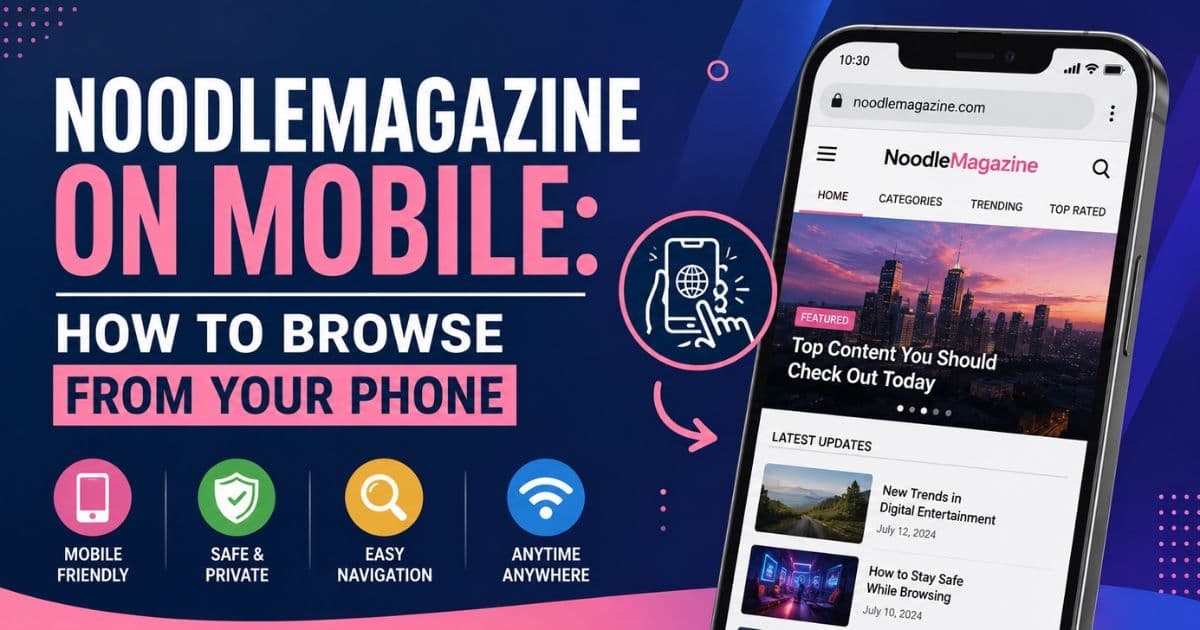
Using online platforms from a smartphone has become part of everyday browsing. People increasingly expect websites to work smoothly on smaller screens, touch-based interfaces, and mobile browsers without requiring a desktop computer. When a platform has a large amount of content, a well-organized mobile experience can make searching, navigating, and reading much easier.
If you are interested in NoodleMagazine on mobile, the basic principles are similar to browsing other content-focused websites from a phone. The experience can depend on your browser, screen size, internet connection, and the way the website is optimized for mobile devices. This guide explains practical mobile browsing considerations, navigation tips, privacy settings, and common troubleshooting steps.
What Is NoodleMagazine on Mobile?
NoodleMagazine on mobile refers to accessing the platform through a smartphone or other mobile device. Instead of using a desktop monitor and mouse, visitors interact with the website using a touchscreen, mobile browser, and sometimes a cellular data connection.
The mobile browsing experience can vary between Android and iPhone devices because different operating systems and browsers handle websites somewhat differently. Keeping your browser updated and using a reliable connection can help provide a smoother experience when visiting content-heavy websites.
Mobile Browsing vs Desktop Browsing
The main difference between mobile and desktop browsing is the available screen space. A smartphone has a smaller display, so menus, navigation elements, images, and text need to be viewed within a much narrower layout.
Mobile devices also rely heavily on touch gestures. Instead of hovering over menus with a mouse, users generally tap, swipe, scroll, and zoom. These differences make mobile-friendly website design particularly important.
Some common differences include:
- Smaller screen dimensions
- Touch-based navigation
- Mobile browser interfaces
- Greater dependence on cellular networks
- Different page-loading behavior
- Limited screen space for menus and controls
How to Access NoodleMagazine From a Phone?
The simplest approach is to open your preferred mobile browser and enter the website address manually. Modern browsers such as Chrome, Safari, Firefox, and Edge are designed to display websites on smartphones and automatically adjust the page according to the available screen size.
Once the website loads, take a moment to identify the navigation menu, search function, page categories, and other available controls. If the layout looks unusual, avoid repeatedly refreshing the page and first check whether your browser or connection is causing the problem.
Using a Mobile Browser
A mobile browser is usually all you need for ordinary website access. You generally don’t need a special application simply because you are using a smartphone.
For a better browsing experience, consider:
- Keeping your browser updated
- Closing unnecessary background tabs
- Using a stable Wi-Fi or mobile-data connection
- Clearing cached website data if pages behave incorrectly
- Checking whether JavaScript is enabled when required
- Using the browser’s standard viewing mode
Your browser also provides useful privacy and accessibility features. Depending on the browser, you may be able to block certain trackers, adjust text size, prevent pop-ups, or change permissions for individual websites.
How to Navigate NoodleMagazine on a Smartphone?
Navigation can feel different on a phone because websites typically collapse desktop menus into smaller buttons or expandable navigation panels. Look for familiar elements such as the menu icon, search icon, homepage button, or category navigation.
When browsing on a touchscreen, avoid tapping repeatedly if a page appears slow to respond. A delayed response can sometimes be caused by network congestion or a page that contains numerous images and other resources.
Finding Content More Efficiently
If a website provides a search function, using specific terms can make content discovery easier than scrolling through a long homepage. Short, descriptive searches generally make it easier to locate relevant pages.
You can also use your browser’s built-in page tools where appropriate. For example, some mobile browsers allow you to find a particular word or phrase on the current page.
Useful habits include:
- Use descriptive search terms
- Check headings before reading an entire page
- Bookmark useful pages
- Open only the tabs you need
- Return to the homepage when navigation becomes confusing
Tips for a Better Mobile Browsing Experience
A good mobile browsing experience isn’t only about the website itself. Your phone’s settings, browser configuration, network quality, and available storage can all affect how quickly pages load.
If pages are taking longer than expected, try switching between Wi-Fi and mobile data to determine whether the connection is responsible. You can also close unused applications and browser tabs to free system resources.
Improve Page Loading Speed
Large images, advertisements, scripts, and other website resources can increase loading times. This is especially noticeable when using a slower mobile connection.
Some practical steps include:
- Use a reliable Wi-Fi connection when available
- Update your mobile browser
- Close unused tabs
- Clear excessive cached data
- Restart the browser if it becomes unresponsive
- Avoid opening many pages simultaneously
It is also useful to remember that website performance isn’t always controlled by the visitor. Server response time, page design, traffic levels, and third-party resources can all influence loading speed.
Mobile Privacy and Security Considerations
Privacy is an important part of browsing any online platform from a smartphone. Mobile browsers can store browsing history, cookies, cached files, and other information locally unless you manage these settings.
Before browsing, review your browser’s privacy controls and understand what permissions you are granting. You should also avoid entering sensitive personal information into unfamiliar websites.
Protect Your Personal Information
A few simple habits can reduce unnecessary privacy risks during mobile browsing.
Consider the following:
- Use a screen lock on your phone
- Keep your operating system updated
- Use reputable browsers
- Avoid entering unnecessary personal information
- Review website permissions
- Be careful with unfamiliar downloads
- Don’t reuse passwords across websites
- Avoid logging into sensitive accounts on unsecured networks
Private browsing or incognito mode can reduce some locally stored browsing information, but it does not make you completely anonymous online. Your internet provider, websites, network administrators, or other services may still be able to observe certain activity depending on the circumstances.
Using Wi-Fi vs Mobile Data
Your choice of network can affect both browsing speed and reliability. Wi-Fi is often preferable when you have a strong, trusted connection, while mobile data can be useful when you’re away from home or another known network.
Public Wi-Fi deserves additional caution. An unfamiliar network may not provide the same level of security as a trusted private network, so avoid entering sensitive information when you don’t know whether the connection is secure.
Managing Mobile Data Usage
Content-heavy websites can consume significant data, particularly when pages contain large images or multimedia elements.
To reduce unnecessary data consumption:
- Connect to trusted Wi-Fi when possible
- Disable automatic downloads where appropriate
- Close pages you aren’t using
- Monitor your browser’s data usage
- Use your phone’s built-in data-saving features
NoodleMagazine on Android Phones
Android smartphones support a wide range of browsers and screen sizes. This means the exact appearance of a website can differ considerably between devices.
If a page looks different from what you expected, first check whether your browser is updated. You can also rotate your phone between portrait and landscape orientation to see whether the layout responds differently.
Android Troubleshooting Tips
If the website doesn’t display properly, try these basic steps:
- Refresh the page once.
- Check your internet connection.
- Update the browser.
- Clear cached website data if necessary.
- Try another reputable browser.
- Restart the browser or phone.
If other websites are working normally while only one website has a problem, the issue may be related to that site’s server or page configuration rather than your smartphone.
NoodleMagazine on iPhone
iPhone users can access websites through Safari or another supported mobile browser. Apple’s browser environment has its own privacy, content-blocking, and website settings that can influence how some pages behave.
If a website doesn’t load correctly, check your internet connection and browser settings first. Switching between Wi-Fi and cellular data can also help determine whether the problem is network-related.
iPhone Troubleshooting Tips
Try the following if you’re experiencing difficulties:
- Reload the webpage
- Check Wi-Fi or cellular connectivity
- Close unnecessary Safari tabs
- Update iOS when an update is available
- Restart the browser
- Try another supported browser
If a website continues to display an error across multiple browsers and networks, the problem may be on the website’s side.
Common Mobile Browsing Problems
Not every mobile browsing problem means that your phone is faulty. Websites can experience temporary server issues, maintenance, traffic spikes, broken resources, or compatibility problems.
Understanding the type of error can make troubleshooting much easier.
Website Not Loading
A blank screen, timeout, or connection error can have several causes. Start by checking whether other websites load normally.
If other sites work, refresh the affected page and try again after a few minutes. If the problem continues across different browsers and networks, it may be a temporary server-side issue.
Pages Display Incorrectly
A website may occasionally appear too wide, have overlapping elements, or show menus incorrectly. Browser cache problems, outdated software, or website compatibility issues can cause these symptoms.
Try clearing cached data or opening the website in another modern browser. If the problem remains consistent, it may require a website-side fix.
Slow Loading
Slow loading can result from a weak connection, heavy page resources, browser problems, or server response delays.
You can test your connection by visiting several unrelated websites. If all of them load slowly, your network is likely contributing to the problem.
Should You Use an App or a Browser?
Whether an app is necessary depends on whether the platform officially provides one. If there is no official mobile application, accessing the website through a reputable browser is generally the straightforward option.
Be cautious about downloading unofficial applications that claim to provide access to a website. An unfamiliar app could request unnecessary permissions or create avoidable security risks.
Avoid Unofficial Downloads
Before installing an application, verify its publisher and source. Avoid downloading APK files or applications from random websites simply because they promise additional features.
A safer approach is to use official app stores and verify that the application genuinely belongs to the platform you intend to use.
Final Thoughts
Browsing NoodleMagazine on mobile is primarily about using a compatible browser, maintaining a reliable connection, and understanding the privacy and troubleshooting tools available on your smartphone. Android and iPhone users may see slightly different layouts or behavior depending on their operating system and browser.
For the smoothest experience, keep your device and browser updated, avoid unnecessary downloads, protect your personal information, and troubleshoot connection or browser issues before assuming that your phone is the problem. These habits are useful not only for NoodleMagazine but for almost any content-focused website accessed from a mobile device.
RELATED POST: NoodleMagazine Privacy Guide